
Ministerial Awakening
No truce can be made with a dull state of affairs in piety and ministry
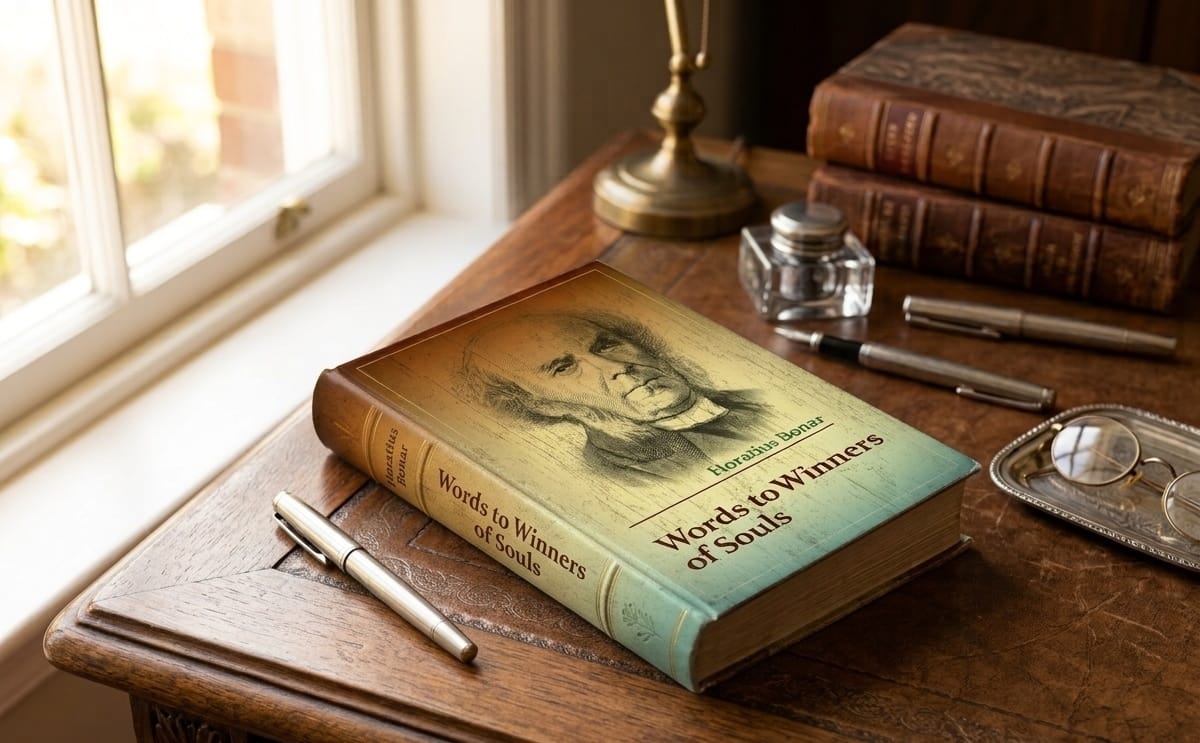
Horatius Bonar’s 1859 classic Words to Winners of Souls is a clarion call to awaken ministers to be humble men, effective in the saving of souls, and to see a genuine revival wrought by the Spirit of God. There are five chapters in this short but soul-searching book. Of these, the fourth chapter is the most convicting, where Bonar reprises the ministerial confession of the Scottish church from 1651 and shows us how we too can confess our ministerial shortcomings. In this devotional reflection, each chapter is succinctly summarized, along with personal reflections and applications for my own life and ministry in Christ.
Bonar begins his book with Oecolampadius, the Swiss Reformer, who remarked, "How much more would a few good and fervent men effect in the ministry than a multitude of lukewarm ones!" In chapter 1, Bonar issues the call for a living ministry. By living, he means ministers who are “distinguished by their spirituality, zeal, faith and love.” These are men who are so taken captive by Christ that their whole lives and ministry are soaked with a passion for His glory, especially through the salvation of sinners. Unless there is an earnest and intentional expectation and seeking after this goal of conversion, we hardly would find it in our ministry. Coming from the Eastern world, I find this emphasis of Bonar so refreshing compared to the stereotypical portrait of Western Christianity as nothing but rationalistic and intellectualistic. Though a lot of Indians have fallen prey to such a fascination for the erudition of Western Christianity, true piety, as we find described in the Bible and demonstrated by the leading men of all ages of the church, is more than a matter of being “learned and able”. What we need in the church, and especially in the pulpit, is a ministry of life. Unless my heart is pounding with the glories of the Christ I study from Scripture, I am not ready to minister life to anyone. Also, as someone gifted with the teaching gift, Bonar calls me to be not content with merely illuminating my hearers on good doctrine, but intentionally and prayerfully seeking their conversion under my ministry. How I need the Holy Spirit for both: life and the longing for souls!
In the second chapter, Bonar deals with the private walk of the Christian minister. Ministerial holiness is a must if we need ministerial success. Walking faithfully with the Lord in private is the reason why great men in the past were phenomenally blessed in their outward labors. In addition to studying the works they have left us, we should, therefore, study and emulate the exemplary piety of these men of the past. Bonar’s insistence on holiness reminded me of the famous quote ascribed to his good friend Robert Murray M’Cheyne, that what the people need the most from a pastor is his holiness. It resounds so well with my own experience as a parishioner. Of the nearly twenty-five years I have been a Christian, I have spent most of them in non-reformed evangelical churches in Kerala. Ministers in these churches were faithful men when it came to the fundamentals of the faith, but they lacked sophistication in secondary matters. However, since they were godly men, they ministered to me deeply. On the contrary, when I moved to Reformed circles, both in India and the US, I came across many men who are externally sound and “reformed” in doctrine, but lacking a vital godliness in their private walk with the Lord. Those men have informed me a lot on theological matters, but not made me hate sin and grow in godliness. The lesson I learn here is how inevitable personal godliness is to my own ministry. The Spirit owns and endorses only that which is holy in the sight of God. Unless I personally know the power of God’s word, how will I commend it to others with confidence?
Bonar lists ministerial defects that creep into our ministry in the third chapter. He begins with the defect of falling into a rut of ministerial professionalism. This is the danger of merely doing all the duties as per schedule, but lacking the heart in it. Merely being satisfied with statistics of all the various programs being overseen by the minister deceives him from seeing his real state. If sinners are not being converted, then all these statistics are worth nothing. This defect of a barren ministry is to be avoided at all costs. A minister should be marked with empathy for the spiritual state of his people. For God’s glory and the good of man, he should renounce all indifference and apathy towards the salvation of souls. This chapter strikes at the root of all pride in ministry accomplishments. Unless sinners are being converted under my ministry, my ministry is dead and barren. Boasting in any other facet of ministry is vain. Bonar also corrects a fatalistic kind of understanding of the sovereignty of God and the means of grace. If the means of grace appointed by the Lord for the conversion of sinners and the edification of saints are duly administered, then we should expect in faith for these ends to be manifest in our ministry.
The fourth chapter is on ministerial confession, and for it, Bonar copiously extracts from the 1651 confession of the ministers of Scotland which deal with sins before and after one enters ministry. The Scottish ministers confessed their lack of proper motivations in entering the ministry, a lack of knowledge of God after entering ministry, merely doing ministry as a duty without proper delight, neglecting the private means of grace, lacking proper and deep sympathy for the people of God, loving pleasure more than Christ, trusting in one’s own abilities for ministry, bitterness and bigotry towards those outside the church, and finally, laziness towards preaching the whole counsel of God, in visiting the sick, and in catechizing the people of God. Bonar then follows this model and confesses the ministerial sins of his day, namely, unfaithfulness, worldliness, selfishness, slothfulness, coldness, timidity, levity, vanity, a rationalism that shuns the glory of the cross, having time for everything but prayer, too little seeking the unction of the Spirit, and too little imitation of Christ. Bonar himself confesses that the document of the Scottish church is “a striking and searching one.” Bonar’s own list is equally convicting. This chapter cannot be read but on one’s own knees in prayer and repentance.
Of all the ministerial sins confessed in this chapter, that which has always been most convicting to me is the lack of prayer that should mark my ministry. While I was in America, vibrant prayer meetings were one of the things I missed the most about church life back in Kerala. Sadly, in America, churches generally get better attendance for game nights than weekday prayer nights. This low view of prayer and prayer meetings was one aspect of American Christianity which I had to repent of and renounce when I returned to India. My ministry in India now is increasingly marked with prayer, both private and public. On a normal schedule, my aim is always to spend half my day in prayer, and the other half in public ministry. I am also surrounded by mighty men of prayer in my co-workers with whom I have enjoyed many sweet hours of prayer on a weekly basis. Reading this one chapter from Bonar has also been an annual practice for me during my yearly sabbaticals. As a result, I have often found an awakening of repentance which refreshes and refocuses my heart to aim for the proper ends for which God has called me to ministry.
In the final chapter, Bonar speaks about the need for personal and ministerial revival that comes by way of ministerial confession and repentance as considered in the preceding chapter. Bonar does so by means of historical figures who were used by the Lord to awaken the church. Richard Baxter plays a crucial role in the mind of Bonar on this topic. Bonar highlights how a personal awakening and the means of preaching are crucial to seeing ministerial revival. At the root of a dead ministry, Bonar identifies, is our unbelief.
“It is unbelief that makes ministers so cold in their preaching, so slothful in visiting, and so remiss in all their sacred duties. It is unbelief that chills the life and straitens the heart. It is unbelief that makes ministers handle eternal realities with such irreverence. It is unbelief that makes them ascend with so light a step ‘that awful place the pulpit,’ to deal with immortal beings about heaven and hell.”
Bonar’s closing chapter always moves me to pray more for a genuine awakening of God. I have always believed revival is a sovereign work of God, but one that I can seek earnestly in prayer and fasting. In the meantime, no truce can be made with a dull state of affairs in piety and ministry. Until the Lord returns, I am called to vigilance and diligence in my fight against sin. As a preacher, I desire the Lord to help me always prize an earnest heart more than an eloquent mouth. By His grace, amen.
